


9 October 2026
Of biodiversity, conservation and hunting: Part 1
A close look at the intricate balance between biodiversity, conservation and hunting – BY PETER MILLS
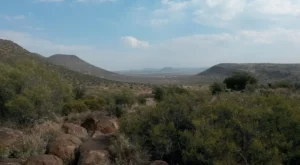
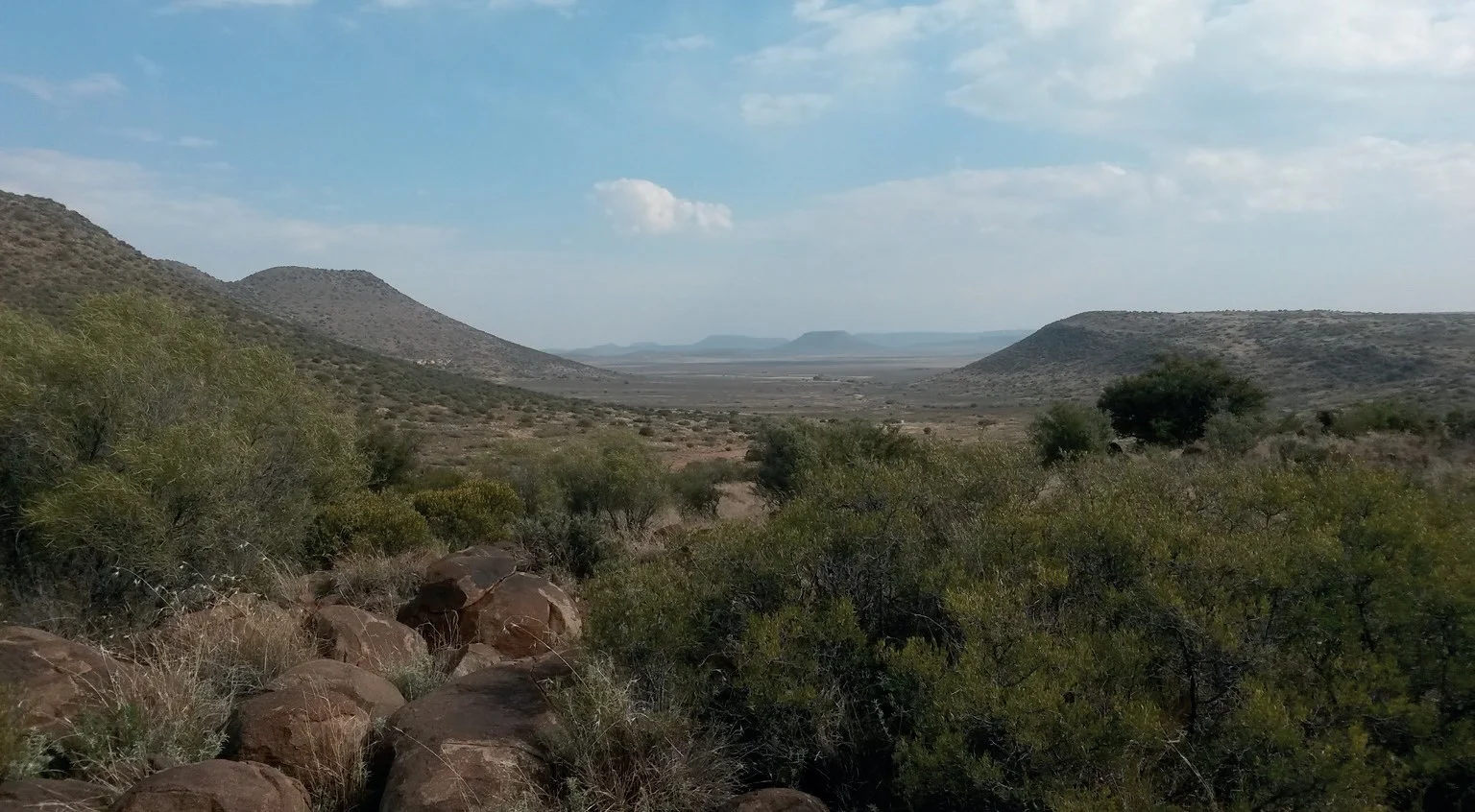
A Karoo farm with its mixed land uses where conservation activities should be taking place.
This is the first of a two-part article about the role of hunting in conservation activities. There are so many misconceptions about these topics that I hope to dispel in this series. Part 1 will focus on how conservation biologists perceive the concepts of biodiversity and conservation, while Part 2 will look at how hunting fits into the picture.
“The sun has set over Ruark’s Africa,” was a comment I saw in a magazine, inferring the passing of the great hunting days of the early 20th century in Africa. Such comments by a growing band of compassionate conservationists, who believe hunting is an outdated pastime reminiscent of colonial Africa, are commonplace these days. This is aggravated by popular literature, social media and uninformed journalists (there seems to be a lot of them around at present) who perpetuate the idea of a biodiversity “crisis”, blaming hunters for the overall catastrophic decline of wildlife.
As hunters, we are quick to dismiss these “Greenie” opinions by citing their flawed understanding of hunting and its impact on wildlife. By contrast, our views are often just as biased and full of innuendo and, sometimes, just as preposterous. I have, too often, been involved in debates with hunters who make unrealistic claims about the importance of hunting in conservation. In truth, public opinion and our world views are rarely driven by “science” or facts but rather by what we read, hear and choose to believe, based on our world views. Unfortunately, and especially these days, our opinions are forged by what we find on unreliable social media platforms. After spending more than 40 years in conservation, and I might add, being an inveterate hunter, angler and consumer of wildlife, I have learned that arguments for and against hunting are, like religious and political points of view, unwinnable!
As a hunter and conservationist, I am interested in these debates as each side holds such strong opinions, but rarely are these based on fact, or even partial fact, and they are highly emotive. Within this fog of misunderstanding, it is highly unlikely that any degree of consensus will ever be reached between opposing views. I would suggest that the reason for this is a limited understanding of the concepts of what biodiversity and conservation mean and how hunting can work for or against conservation strategies. The purpose of this article is to put the concepts of biodiversity, conservation and hunting into perspective without falling into ideological traps or suggesting that there might only be one correct answer in an increasingly polarised society.
Why is this topic important in a magazine like SA JAGTER/HUNTER? Simply because it is in our name, and we should all be able to discuss such matters from an informed and unbiased perspective.
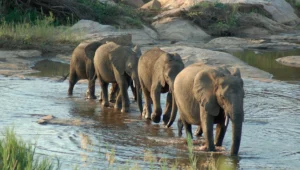
Elephant in the Kruger National Park. Although this is regarded as a natural landscape, the functioning and composition of the park have changed because of wildlife management interventions and the fact that the area is now fenced off and thus no longer an open landscape for the free movement of large herbivores, like elephant. As a result, many of the grasslands have given way to bush encroachment. There are now more woody plants in the Kruger than ever before, even though large elephant numbers are being blamed for the current destruction of large trees, a paradox that requires further explanation elsewhere. The point is that the Kruger, although regarded as natural, is undergoing changes all the time, the implications of which are difficult to understand, even by the scientists working there. PHOTO: NIC DE BRUINE
OF BIODIVERSITY
There are many misconceptions about what biodiversity means. It is a relatively new concept that only evolved during the late 1980s after it became entrenched in conservation language. The Convention on Biodiversity (CBD) was established at the Rio Conference in 1992, some 30 years ago, and conservation biologists themselves are still grappling with complex ideas surrounding such a definition.
The general definition suggests that biodiversity is the variety of all life on the planet, which is true, but this definition does not help much unless one understands a few basic geographic and ecological principles. Without a basic understanding of distribution (biogeography), speciation (how species evolve), species richness and abundance, adaptation and ecosystem functioning, this definition is too broad to make any sense to the layperson – and, let us face it, that applies to most of us.
Most people understand biodiversity as one grouping of all living things on the planet, and so we have become obsessed with the numbers of species (species richness). The perception exists that the greater the number of species in an area, indigenous and/or introduced, the better (as was expounded to me by a lawyer/angler trying to defend the introduction of alien fish into the rivers and streams in South Africa, saying, “The more, the merrier.”). In fact, biological diversity is a complex relationship between the number of species and the size of each population.
Biodiversity is understood as the complex interactions between the structure, function and composition at any specific site (see Noss diagram on previous page) and ranges from genetic to landscape level. It is the interplay between the living (plants and animals) and the non-living (geology, water and soils) components at a specific geographical location. That is, the assemblage of plants and animals assumed to have evolved and survived in that area naturally.¹
To make these concepts clearer, I have chosen two examples: the Kruger National Park, a near-natural landscape, and an altered or domesticated one like the Karoo farm where I do my annual springbok hunt.
The Kruger is situated in the Lowveld, which is predominantly in the Savanna Biome where a tree (woody) layer and a grass (herbaceous) layer coexist and provide habitats for all the species naturally occurring there, i.e. indigenous and endemic (found only there). The animals and vegetation in the Lowveld national park would have traditionally occurred there, although some indigenous animals have recently been reintroduced.
The value given to biodiversity at a site is thus not given in numbers, but its integrity is rather measured according to ecological interactions between plants and animals that live there. Lion, elephant and plains game are prolific, each having their niche (ecological position) in the system and their unique conservation status – some common, some vulnerable and some rare or endangered, requiring different management interventions.
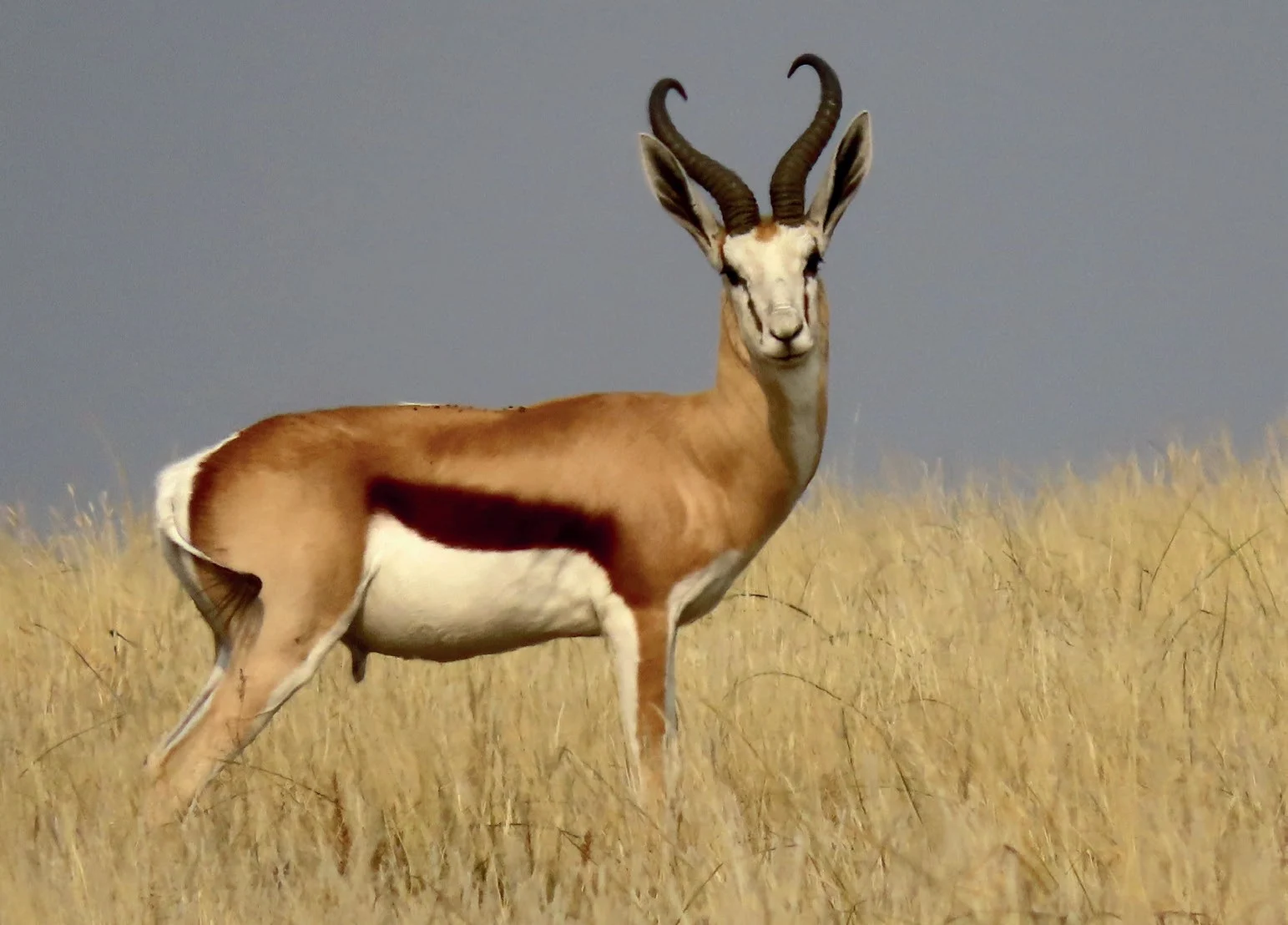
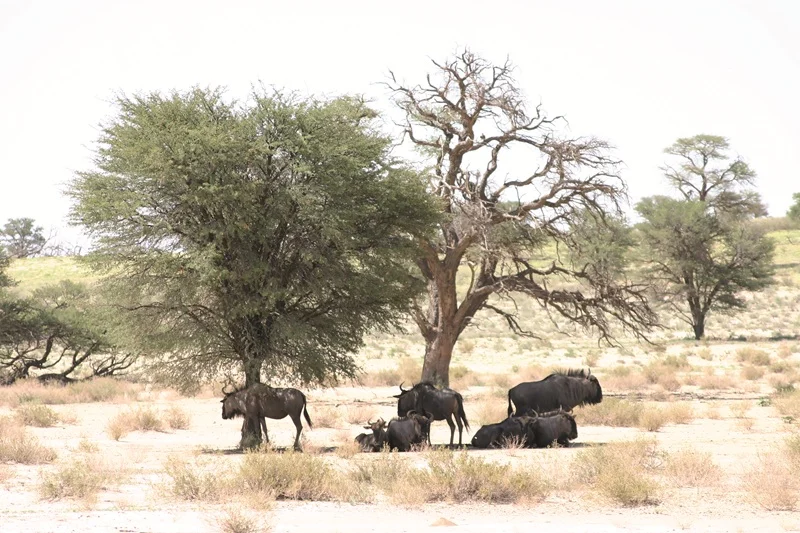
So, in the Lowveld, one should not expect to find grassland species such as blesbuck, springbuck or black wildebeest. Ecologically, they do not belong there, even though some farmers like to have them on their properties.
On my Karoo hunting farm, there is a different but specific assemblage of plants and animals that have historically occurred there. The vegetation in this area is called the Upper Nama-Karoo, characterised by a geomorphological landscape of buttes and mesas with its specific assemblage of karoobossies that make those lamb chops so tasty. Layer on top of that the springbuck, zebra, black wildebeest, insects, reptiles and birds and, voila, one has a natural Karoo landscape with its unique biodiversity.
Now add to that domestic livestock like sheep, cattle, donkeys and chickens, and humans with their roads, fences and other infrastructure. What we have now, like the rest of the country, is an altered landscape with a mixture of wild and introduced domesticated animals that make up the farm’s local biodiversity. It is not the number of species that matters but the interaction between the species and humans, the species and the habitat, and the management interventions required to manage both indigenous and alien species and the habitat.
Many aliens may be invasive and/or have a significant negative impact on the habitat and associated species, requiring control interventions, while others are not invasive or do not have significant negative impacts, and will not need any management whatsoever.
¹ In this article, “natural” will be understood to mean an area that has not been altered or interfered with by humans. This is a broad definition, and we know that few places on earth do not show signs of man’s hand, but we need a baseline from which we can proceed with this discussion.
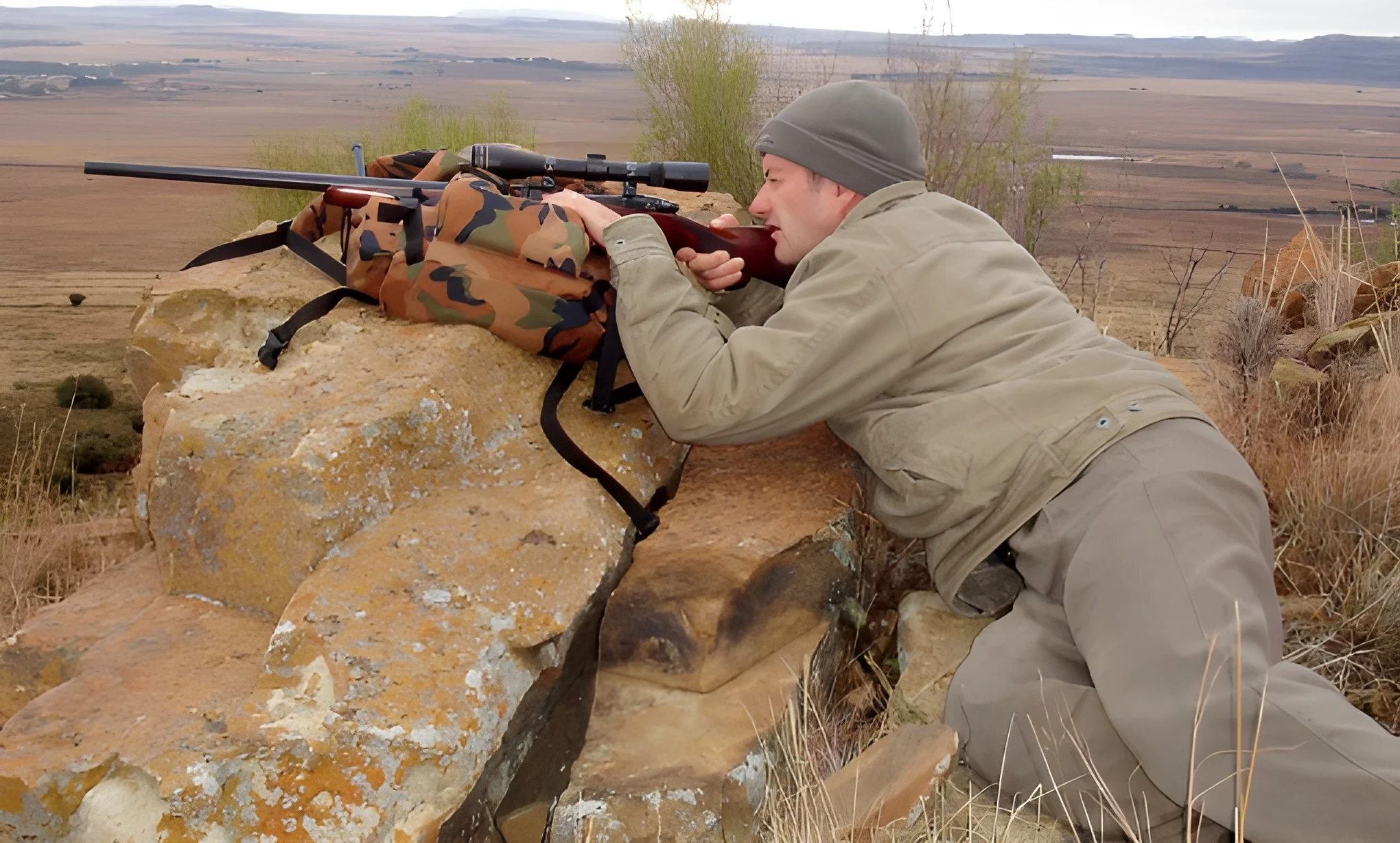
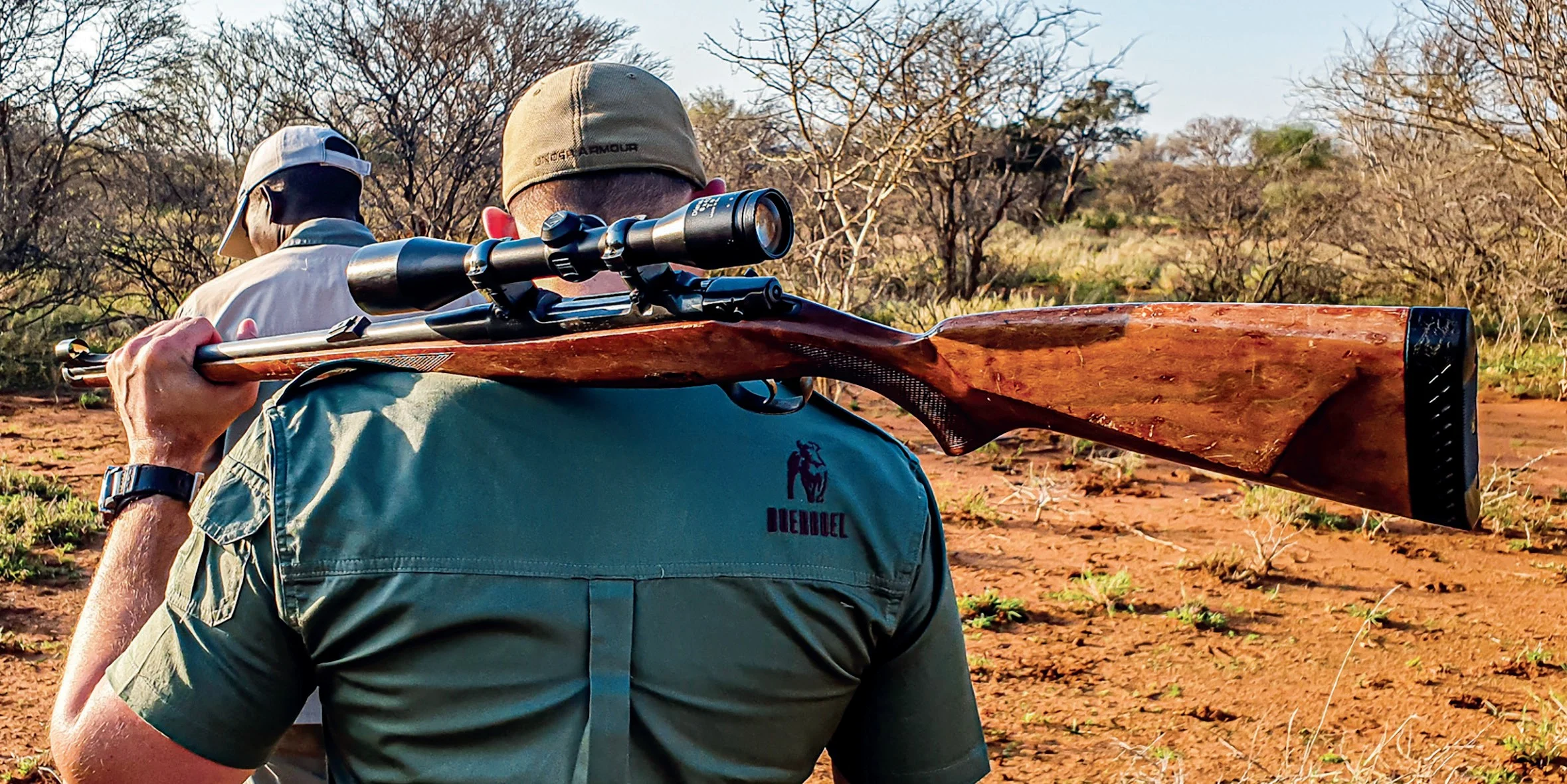
Brian Reilly sighting his rifle on the Karoo farm near Philipstown. Karoo vegetation still predominates, but its structure, function and composition would have changed significantly over the past 100 years with the introduction of modern farming methods.
OF CONSERVATION
If biodiversity is defined as the living components of our biosphere, then conservation action constitutes those management interventions required to manage them. While the word “conservation” may be used in many contexts, it has taken on vastly different meanings, depending on one’s point of view. In the context of this article, we are talking about nature/biodiversity conservation, for which the objectives are rather simple – to secure the life cycle of indigenous species in their natural habitat. By specifically stating the biodiversity/nature focus, we are automatically following the principles of ecology as we understand it now and are eliminating the many, often conflicting, socio-political biases the public holds on this topic.
All the plants and animals that constitute South Africa’s biodiversity may be found across the entire landscape at various degrees of disturbance. Travelling along any of our potholed roadways, you will largely be exposed to altered farmlands containing a mixture of alien plants and animals, as well as indigenous and domestic animals. Much of our wildlife persists here, and any intervention by the farmer to keep his wildlife could constitute a conservation intervention. However, the keeping of fallow deer or intensive breeding of antelope or colour variants might well constitute wildlife management but is of no conservation value to the country! Wildlife management and conservation are not mutually exclusive, but they are not necessarily the same thing.
A conservation action would therefore constitute any intervention aimed at securing the species within their natural environment, which may or may not be within any one of our national parks, nature reserves or any other formally protected areas.
I must emphasise that it is important to keep in mind that conservation interventions must take place over the entire landscape, not just in protected areas. South Africa’s protected areas are simply not large enough to secure the persistence of the entire extent of our biodiversity. This holds true, especially for our charismatic megafauna like lion, rhino, buffalo and elephant – animals that require large home ranges to persist naturally. Areas outside formally protected areas, like our game ranches, cattle ranches and even cultivated crops, become just as important for the country’s conservation strategy, and conservation becomes everybody’s business, not only that of conservationists and game rangers.
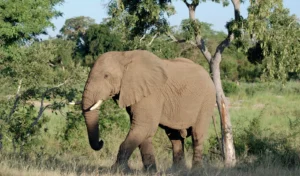
Elephant in open landscape.
For far too long, conservationists themselves have focussed on rarity, and the primary strategy to achieve this has been by establishing protected areas and management efforts directed at rarer species. Modern approaches tend to consider complete systems, including areas outside formally protected areas, no matter how altered these systems may be. Key concepts that guide decisions are, as already mentioned in the section on biodiversity, indigenous and natural systems as the broad baseline.
However, most systems are altered and have been so for a long time, but an ecological baseline, at least in principle, is nonetheless necessary. Conservation is essentially looking ahead towards the kind of environment we want to live in and not only those interventions that strive to keep things as they are, or even worse, trying to get them back to what the area looked like historically – simply impossible.
To illustrate my point, some examples are in order. Management strategies to stabilise the rhino population in the Kruger National Park are critical to ensure the population does not become locally extinct. Because rhino are an indigenous species, provision is made in our legislation to protect them. Direct protection measures, like securing their habitat through anti-poaching measures, go hand in hand with indirect measures that encourage community wellbeing and support. Conservation success will be achieved only once rhino populations start increasing in that area.
Let us return to the Karoo farm for my second example, where conservation interventions are more ancillary – by chance rather than by design. For instance, managing huntable populations of springbuck, wildebeest, red hartebeest and blesbuck will also ensure that other species, such as scrub hares, butterflies, insects and reptiles, are also able to survive there. At the same time, the farmer will be primarily managing his land for sheep, which is his main source of income, so while the proper management of his rangeland is critical for his farming enterprise, it also supports a variety of wildlife.
These examples illustrate that conservation interventions can take place at any point across the landscape, from a city centre to an untouched piece of wilderness within the Kruger National Park. It all depends on what one’s conservation target is for that area and whether conservation measures have a distinctly positive biological outcome.
However, a conservation intervention rarely occurs outside a socio-economic and political framework and often involves parties that do not fully understand the issues, which is why poor conservation decisions are often the outcome. The expanding elephant population in the Kruger National Park is a case in point.
By now, you will have realised that conservation is a complex concept that has changed since its inception as a land use in North America during the mid-to-late 1800s. While it is a philosophy and a practice, the outcome of any intervention must benefit the natural system and the plants and animals in that system, irrespective of the ideology driving the practice.
It is a fact that many of us value our wildlife capital, but for others, it has no importance. For most, the idea of an Africa without elephant has probably not crossed their minds, and they will be happy in a world filled with only rats, cats and Indian mynas. Whether wildlife persists at all will, in the end, be a societal choice. Those in the cities and those in rural African villages have wildly different opinions on this, but for one, I value our natural wildlife heritage and it is worth all efforts to protect it.
Hopefully, this article has garnered a better understanding of what biodiversity (natural habitat, including animals) is and that conservation is merely those management tools we use to ensure the persistence of our wildlife capital. In Part 2, we will look at the role hunting plays in achieving conservation objectives and targets.
(This article was published in the August 2023 edition of SA JAGTER/HUNTER)